Notes · October 26, 2026
How to cross-check an EPC's monthly progress report against a module tally
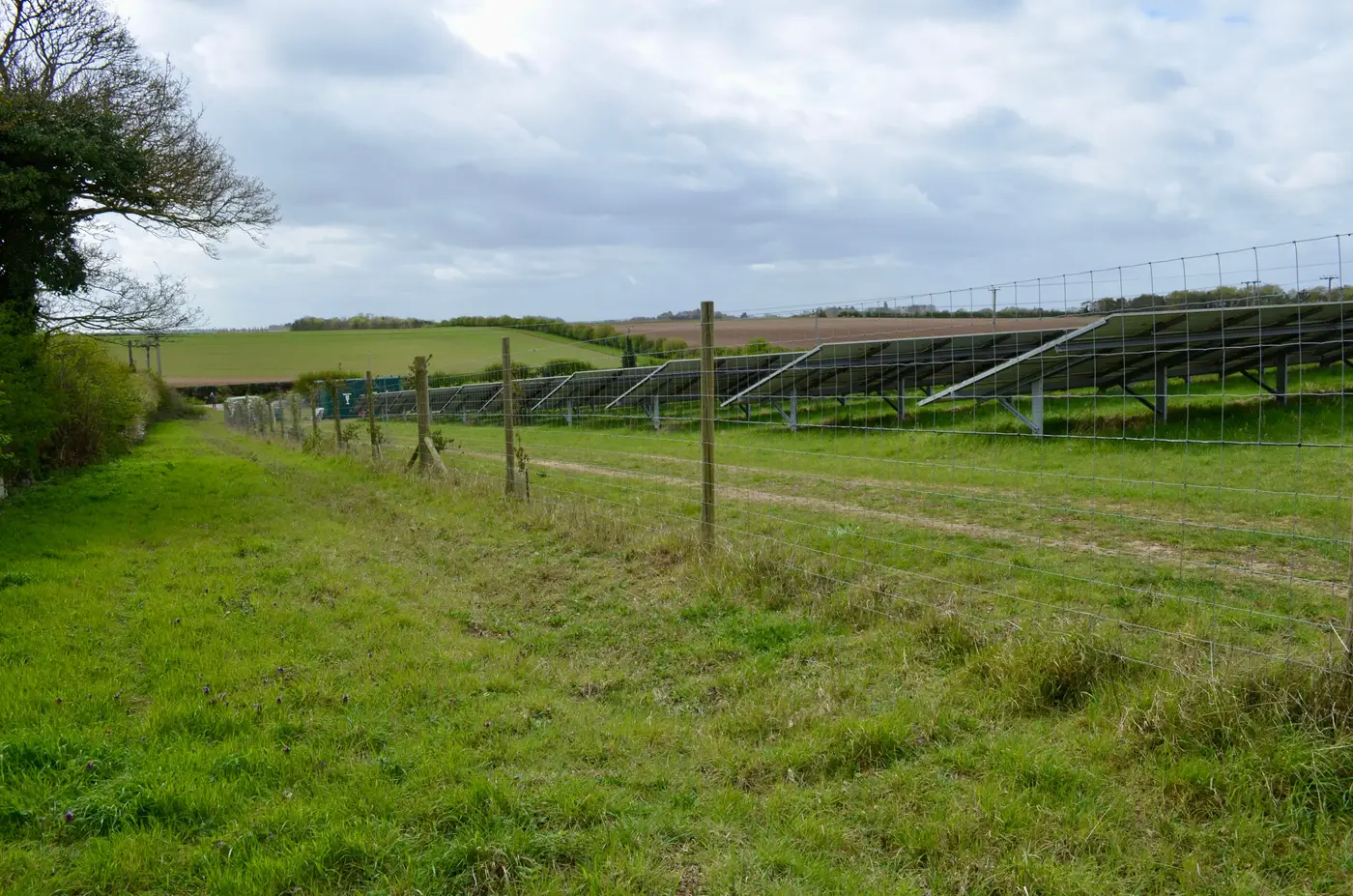
An EPC's monthly progress report usually shows one number that matters to the draw schedule: percent complete. The problem is that number comes from the same party asking to get paid. It's rolled up from site daily logs, sometimes from a super's estimate walking the rows, sometimes from a spreadsheet nobody on your side has seen built. None of that is fraud by default. It's just not an independent count, and a drawdown schedule tied to self-reported percent complete puts the lender in the position of trusting the builder's math on their own invoice.
Cross-checking that report against a counted module tally turns a narrative into an audit. Here's how that check works in practice.
Start with what the report claims, not what it summarizes
Pull the EPC's reported module count for the period, not just the percent-complete headline. "68% mechanically complete" gives you nothing to count against. "14,200 of 20,900 modules installed" gives you a number you can verify against your own tally. If your EPC's monthly report only gives you the rolled-up percentage, ask the superintendent for the underlying count before you schedule the site visit or imagery order. You can't reconcile a number you don't have.
Also pull the interconnection or construction milestone schedule for that draw period. Milestones are usually written against racking complete, modules set, and inverters commissioned, each as a count or a percentage tied to total design quantity. Line those three categories up separately. A site can be racking-complete and module-light, or module-heavy on one block and empty on another while the blended percentage looks fine.
Where the counted tally and the self-report usually diverge
The gap rarely shows up as outright overstatement across the whole site. It shows up in a few predictable places:
Partial rows get counted as complete. A table with eight of ten modules racked sometimes gets logged as installed because the crew intends to finish it that week.
Inverter counts lag module counts in the report but not on the ground, or the reverse, because they're tracked by different crews filing different paperwork.
Staging areas get miscounted as installed capacity when modules are palletized on-site waiting for racking, which inflates a count taken from a yard walk rather than a row-by-row pass.
None of these require bad faith to produce a wrong number. They're the normal noise of a monthly report built from multiple crews on a schedule. What makes the comparison meaningful is a count that comes from a source other than the EPC's own paperwork.
Reconciling the two numbers
Once you have both figures, module reconciliation is straightforward: independent count minus reported count, as a raw number and as a percentage of total design quantity, broken out by racking, modules, and inverters separately rather than blended. A small gap inside normal reporting lag is routine. A gap that's wide, or concentrated in one area of the site, or that's grown from the prior quarter instead of closing, is the thing you raise with the EPC before releasing the draw, not after.
This is also where timing matters. A count taken weeks after the report date will show more modules than the report claimed almost by default, because construction didn't stop. Match your independent count to the report period as closely as you can, or at minimum note the lag so you're not crediting the EPC for work the count didn't actually observe.
Getting an independent count has traditionally meant sending someone to walk the site with a clicker, which is slow and expensive enough that most lenders only do it at a handful of milestones over a construction loan's life. A quarterly counted inventory of modules, tables, and inverters pulled from VHR imagery gets you that reconciliation number on a schedule that matches your draw cadence, without putting a site visit on the critical path for every milestone.
If you're setting up module reconciliation on an active construction loan, Solar Panel Counting is built for exactly this comparison.